Reading time: 9 minutes
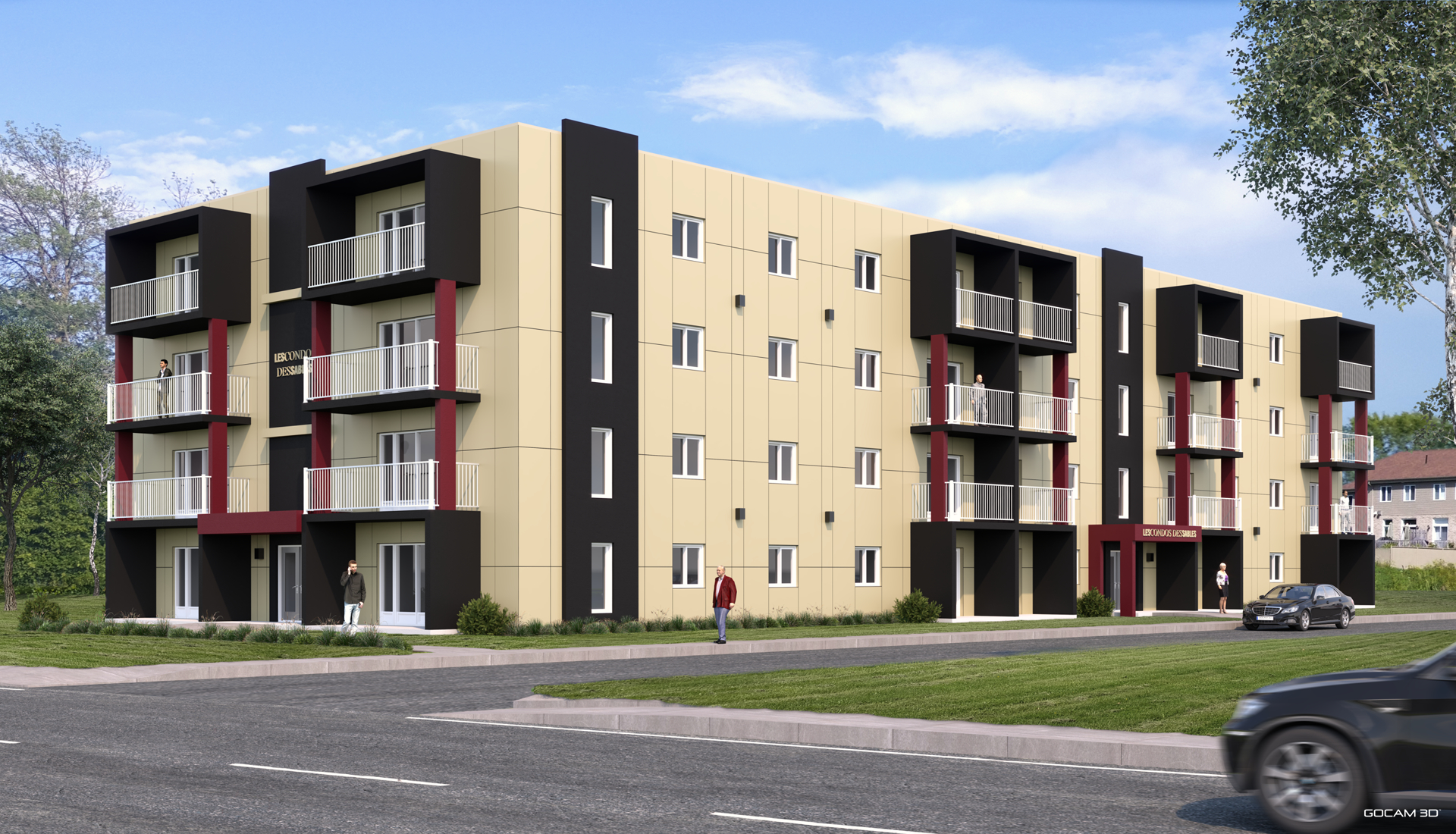
In 2026, obtaining a construction permit in Quebec represents a major strategic challenge for real estate developers and investors. According to the Communauté métropolitaine de Montréal (CMM), average municipal approval timelines for complex residential projects can exceed 8 to 14 months, depending on the municipality and the type of zoning. This reality increases pressure on developers, who are already facing rising construction costs, a housing shortage, and growing regulatory requirements.
In this context, visual clarity becomes a decisive lever. Cities seek to quickly understand the social impact of a project and its effect on the surrounding environment once built. This is where 3D renderings play a central role. A well-executed real estate 3D rendering makes it possible to translate complex technical plans into clear, readable 3D images, facilitating municipal decision-making. For Quebec real estate stakeholders, mastering 3D renderings for municipal approvals in Quebec is no longer an advantage: it is a necessity.
Quebec municipalities are facing growing responsibility regarding social acceptability and urban integration. According to the organization Vivre en Ville, over 70% of contested projects are challenged due to a lack of understanding of the project by citizens and urban planning advisory committees (CCUs). Real estate 3D renderings help directly address this issue.
Thanks to 3D views, decision-makers can analyze a building’s actual volume, its perceived height, and its placement within the existing urban context. A realistic 3D perspective shows whether a project adheres to the architectural style required by the municipality: pastoral, rustic, contemporary, or modern.
Cities also want to ensure that the future building integrates harmoniously with the neighborhood. 3D images provide an immediate representation, far more effective than technical plans and elevations. This is why an increasing number of zoning regulations now require real estate 3D renderings from the project submission phase to the municipality.
By collaborating with GOCAM 3D™, you ensure that you have and present 3D visuals that meet the expectations of CCUs, reducing back-and-forth and increasing the chances of approval on the first submission.
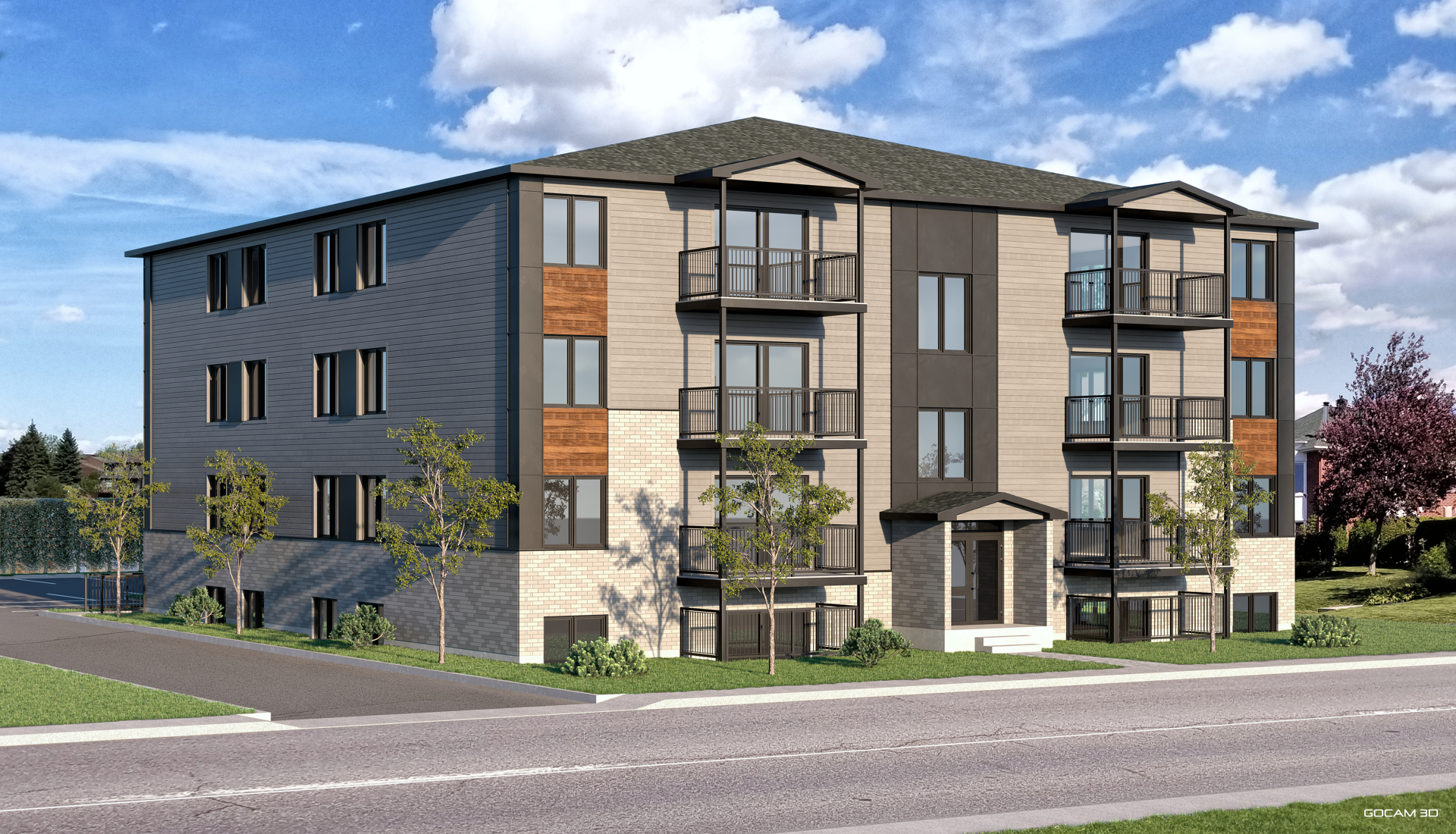
Municipalities do not request 3D renderings for aesthetic reasons: they want to see, understand, and evaluate quickly. A realistic 3D rendering allows for the instant analysis of projected shadows, colors, materials, and architectural details such as windows, door styles, ornaments, and more.
According to the Ordre des architectes du Québec (OAQ), the use of realistic 3D visualizations can reduce project review time by up to 30% during urban planning committees. 3D perspectives facilitate the validation of landscaping, building placement, and visual impact on the immediate neighborhood.
3D views also help demonstrate compliance with setbacks, clearances, alignments, and maximum height requirements. A well-chosen 3D view allows elected officials to visualize the future environment without complex technical interpretation.
By presenting clear, precise, and contextualized realistic 3D renderings, developers increase their chances of success and reduce requests for modifications. A professional 3D rendering thus becomes a strategic tool to speed up municipal approval for any real estate project in Quebec.
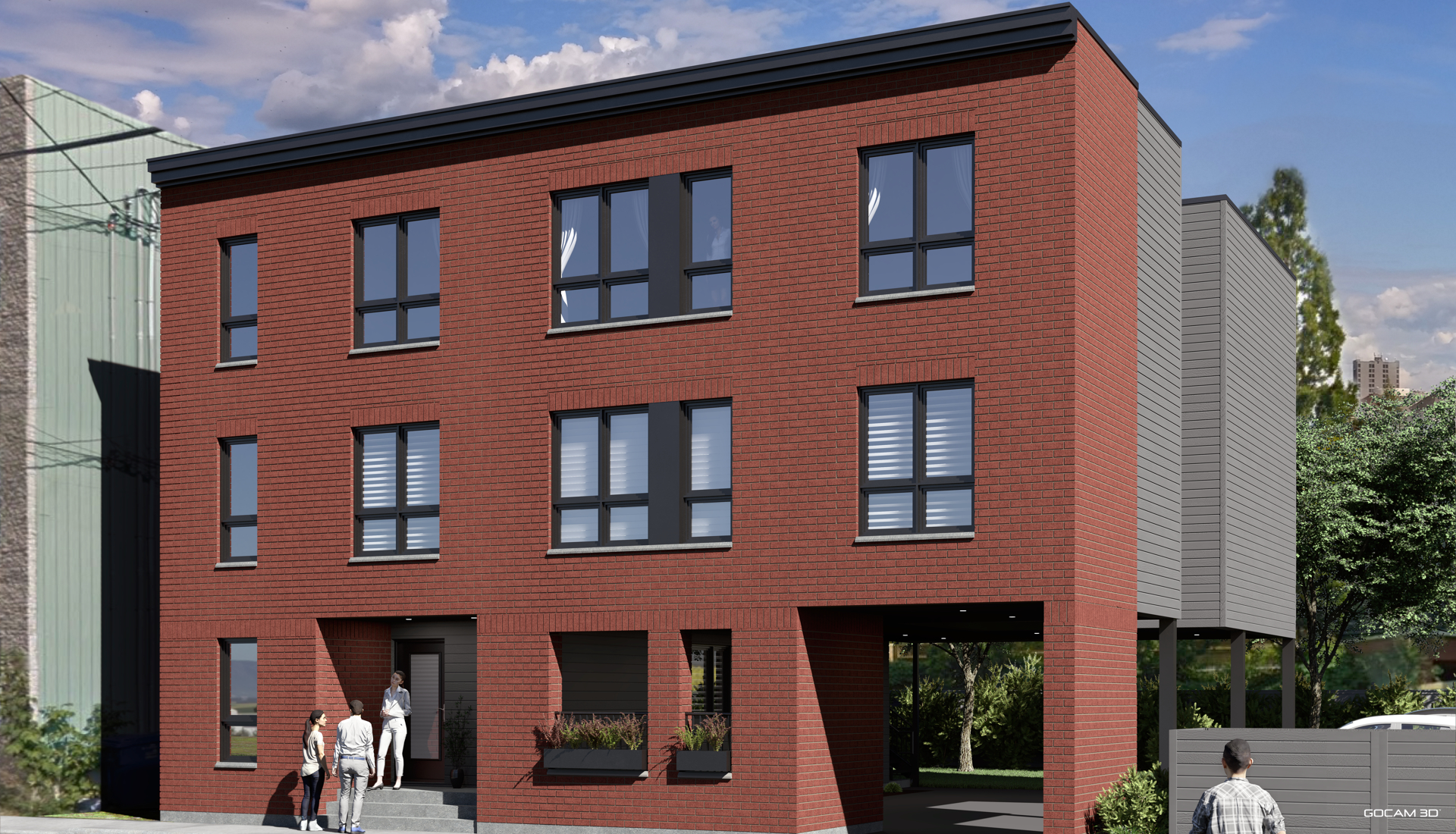
Quebec municipalities rely on different types of 3D visualizations depending on the nature of the project. Street-level 3D perspectives are essential for analyzing the building’s integration into its immediate context. 3D façade renderings allow for the validation of proportions, materials, and architectural language.
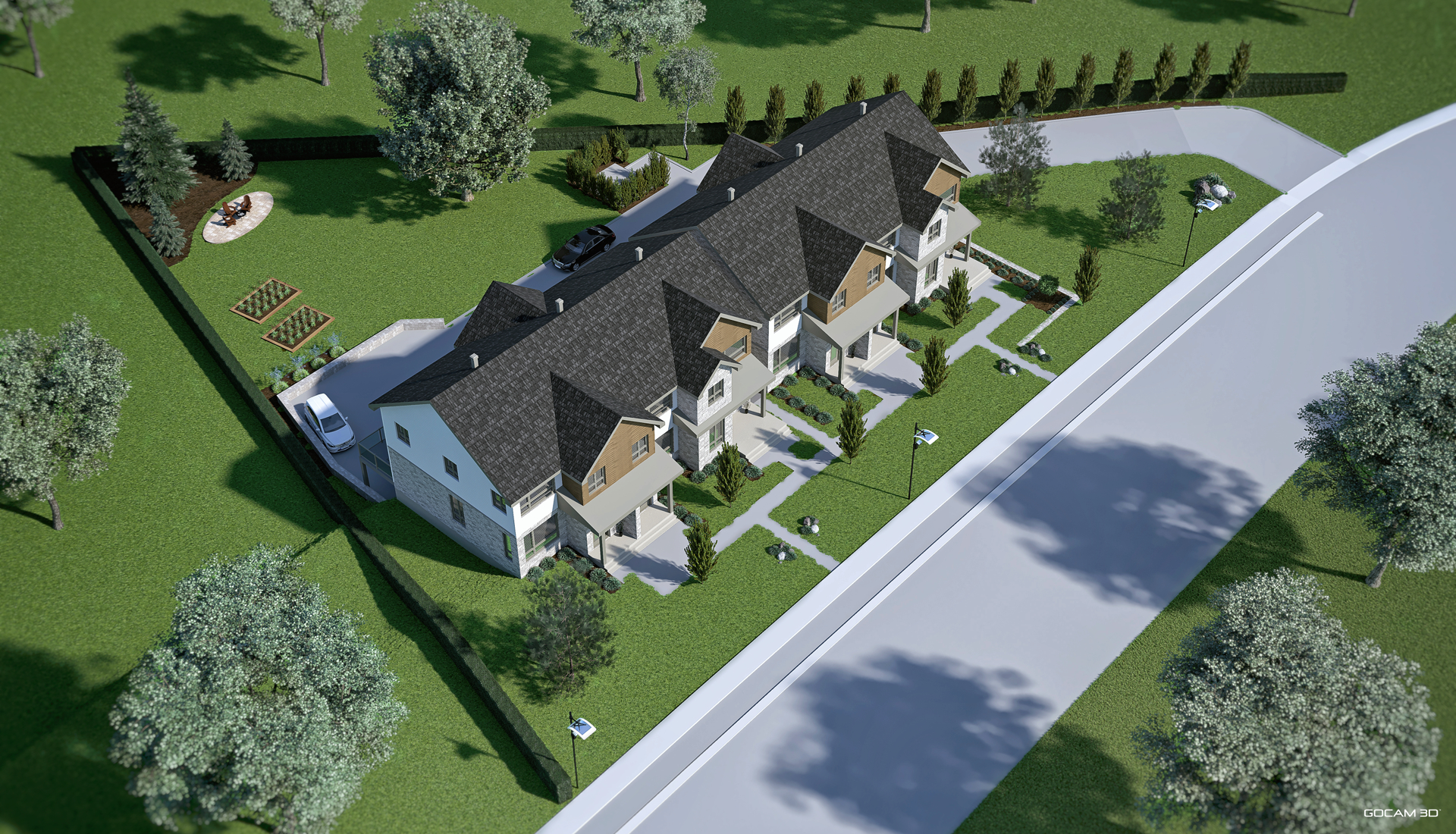
3D bird’s-eye views provide an overall understanding of the site layout, access points, parking, and relationship to the neighborhood. A 3D bird’s-eye view is often required for multi-unit or high-density projects.
Contextual massing allows for the comparison of existing and proposed building volumes. Before-and-after 3D images clearly illustrate the site’s evolution, a key factor for municipal approval. According to CMHC (Canada Mortgage and Housing Corporation), projects using comparative 3D visualizations achieve faster approval in 64% of cases.
3D perspectives by project phases are also used to demonstrate the progressive development of a site. Thanks to the expertise of GOCAM 3D™, each real estate 3D rendering is designed to meet Quebec municipal requirements precisely.
Amateur, non-professional 3D renderings undermine a project’s credibility and slow down approvals rather than speed them up. According to a study by the Institut de développement urbain du Québec (IDU), nearly 40% of delays are caused by inadequate visual documents.
Presenting only interior 3D renderings is a common mistake: municipalities require exterior 3D images placed in context. A poor 3D view angle can hide issues with building massing or placement.
Lack of context—missing neighboring buildings, ignored topography, nonexistent vegetation—complicates analysis. A municipal 3D rendering must be informative, neutral, and true to the site’s realities.
Our production process at GOCAM 3D™ is based on close collaboration with developers, architects, and engineers. According to the Canada Green Building Council, collaborative projects reduce approval timelines by an average of 25%.
Each 3D image is produced with precision, adhering to local regulatory constraints. The 3D views are validated according to the specific requirements of each Quebec municipality.
Thanks to a proven methodology, GOCAM 3D transforms technical plans into clear, precise, and strategic real estate 3D renderings, optimized for municipal approvals.
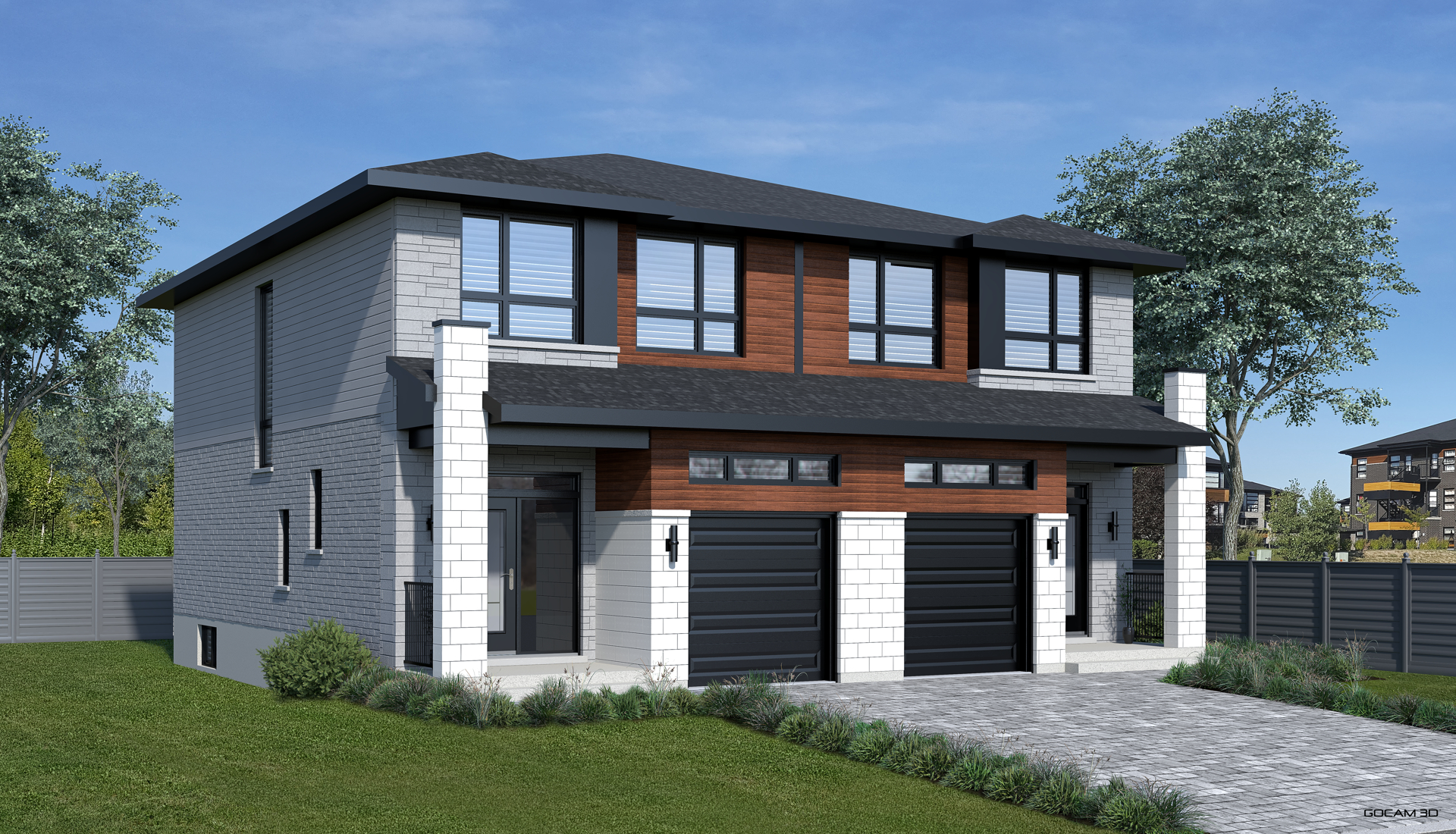
In 2026, 3D renderings for municipal approvals in Quebec have become an essential tool for speeding up the acquisition of building permits. According to CMHC, projects that are well-documented visually are 1.8 times more likely to be approved without major revisions.
A professional real estate 3D rendering helps reassure municipalities, engage citizens, and attract investors. By collaborating with GOCAM 3D™, you maximize your chances of success while reducing delays and costs associated with refusals or modifications.
Written by Philippe Campagna-Vézina, President of GOCAM 3D inc. on 28/12/2025
3D renderings for municipal approvals in Quebec allow municipalities to quickly assess a project’s visual impact on the neighborhood and urban environment. They facilitate volumetric understanding, compliance with the architectural style, and social acceptability, thereby reducing building permit approval timelines. For developers, a clear and realistic 3D rendering increases the chances of obtaining a construction permit approved on the first project submission to the city.
The most effective types of real estate 3D renderings for municipal approvals include:
A realistic and professional 3D rendering allows municipalities to immediately visualize:
According to CMHC, projects accompanied by realistic 3D visualizations are approved up to 1.8 times faster. A precise real estate 3D rendering is therefore a strategic tool to accelerate municipal approval of a real estate project in Quebec.
Discover novelties, trends and our latest projects.